Most cybersecurity environments begin with a clean setup. One tool for detection. One for identity. One partner for advice. Every choice is logical on its own. But as vendors, services, and providers are added, the stack keeps expanding. And since components never stand alone, each new layer makes the overall system harder to grasp and control.
At some point, the real challenge is no longer selecting the right tools. It’s coordinating everything and everyone. Context gets lost between teams and valuable time disappears trying to figure out who should act and how.
Ask yourself:
- Do your security domains actually work together and communicate properly
- When something happens, who takes ownership and who is responsible?
- How much time is lost in handovers and alignment?
- Do you really have a clear overview of your security setup, the partners involved, and what each of them does?
Are you acting on shared context, or on fragments?
Security organized in silos does not scale. Detection, response and governance may exist, but without strong connections, collaboration turns into friction.
That is where the math changes. When security services are delivered in isolation, 1 + 1 stays 2, or results in even less. But when services are connected, coordinated and built around shared context, they start reinforcing each other. That’s where 1 + 1 becomes 3.
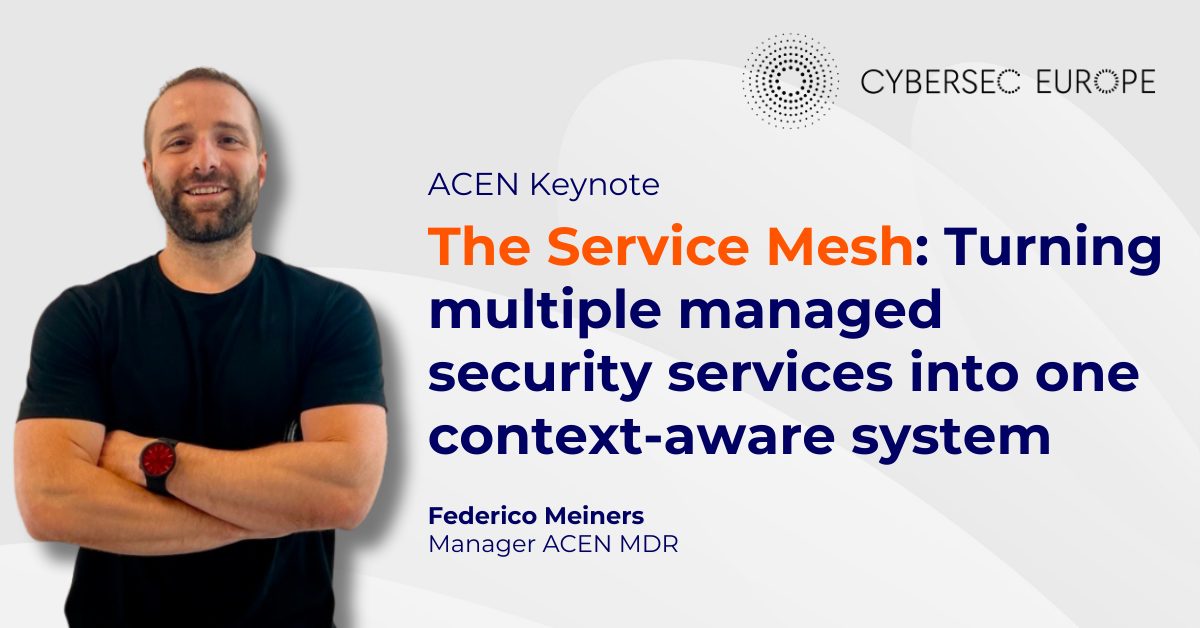
Want to learn more? Join our session at Cybersec Europe with expert Federico Meiners - 20/05/2026 ( 4PM, Theatre 2).
During this Cybersec session, expert Federico Meiners explains how a service mesh approach helps organizations reduce friction, clarify ownership and turn separate security services into one connected whole.